Laminitis is an inflammatory condition that affects the laminae, which are tissue projections that anchor the coffin bone to the hoof wall in a horse’s foot [1] [2] [3]. Inflammation causes the connection between the hoof and bone to weaken, which can be painful and debilitating. Laminitis is most frequently seen in the two front feet but can occur in any or all feet. It occurs in all breeds of horses
What Causes Laminitis in Horses?
The most common cause of laminitis is excess grain or sugar intake. It can also occur when a horse ingests toxic plants or when a horse favors a limb due to injury of another limb. Laminitis can also be a symptom of other conditions or diseases such as equine metabolic syndrome (EMS), pituitary pars intermedia dysfunction (PPID or Equine Cushing’s Disease), or systemic inflammatory response syndrome (SIRS).
The term “founder” often comes up when discussing laminitis. Founder refers to the rotation of the coffin bone inside the hoof capsule; it can occur in severe cases of laminitis but is not necessarily present in all cases [1]. Founder is often the result of chronic laminitis.
Symptoms and Signs of Equine Laminitis
Signs of laminitis are a reluctance to move or exercise, altered stance to minimize weight placed on affected foot or feet, and slow, short-striding gait [1] [2] [3]. In acute cases, the affected hoof or hooves may be warm to the touch, and digital arteries near the hoof or hooves may notably strong pulsations [1] [2] [3]. Heart and respiratory rates are often elevated, usually due to pain. Lameness may become apparent in more severe cases.
Diagnosing Laminitis
Diagnosis is often done by observation of clinical signs and evaluation of the horse’s history [3]. The veterinarian will take into account any previous diagnoses (i.e. EMS or PPID), recent limb injury, typical diet, and recent intake of excessive carbohydrates or potentially toxic substances. In more complex or severe cases, X-rays may be used to visualize possible displacement or rotation of the coffin bone.
Because laminitis causes permanent damage due to inflammation, early intervention is critical. Identifying and treating the underlying cause is the first step, but it cannot reverse damage that has already occurred. In cases with PPID or EMS, diets must be adjusted to limit intake of non-structural carbohydrates (NSCs). In cases with exposure to a toxic substance, the source of the toxin must be removed, and the proper remedy for the toxin must be given. In cases with widespread, systemic inflammation (i.e. SIRS or septicemia), the cause of the inflammation and/or infection must be identified and treated.
Equine Laminitis Treatment
Once underlying causes are addressed, most treatment involves supportive care, measures to minimize progression, and pain management. Non-steroidal anti-inflammatory drugs (NSAIDs) are often administered to reduce pain and inflammation [1] [2] [3]. Cold therapy, specially fitted shoes, regular farrier care, and adequate rest are all helpful strategies for managing laminitis in horses and improving their quality of life [1] [2] [3]. Surgical options for intervention do exist for more extreme cases [3].
As a potent anti-inflammatory, cannabidiol (CBD) can potentially be a useful tool for pain management in horses with laminitis. Early research has demonstrated CBD’s ability to notably reduce pain for horses suffering from laminitis when administered in conjunction with other supportive therapies [4]. It also seemed to play a role in the horses’ improved ability to walk after suffering a laminitic episode and was well-tolerated by the horses, even at high doses [4]. Though not quantifiable, veterinarians noted improved mental state and appetite after CBD was added to other supportive therapies [4].
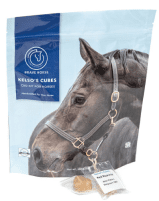
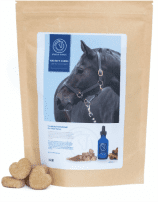
Brave Horse line of products gives horse owners multiple options for easily administering CBD to horses suffering from painful and debilitating laminitis. CBD oil and Kelso’s Cubes are great options for giving a horse a tasty, precisely measured dose of CBD. For horses that have PPID, EMS, or insulin resistance and must adhere to a low-NSC diet horses that have also developed insulin resistance, check out Bo’s OatBites. They are made without any added sugar, and each treat contains just one carbohydrate. This allows horses with insulin resistance to benefit from the anti-inflammatory effects and analgesic properties of CBD without consuming excessive sugar or starch. And they’re great for picky eaters too!
References
[1] American Association of Equine Practitioners. Laminitis: Prevention & Treatment | AAEP. aaep.org. https://aaep.org/horsehealth/laminitis-prevention-treatment.
[2] Laminitis in Horses – Musculoskeletal System. Merck Veterinary Manual. https://www.merckvetmanual.com/musculoskeletal-system/lameness-in-horses/laminitis-in-horses.
[3] Young, A. Laminitis. School of Veterinary Medicine. https://ceh.vetmed.ucdavis.edu/health-topics/laminitis.
[4] Luedke, C.; Wilhelm, T. Cannabinoids in Equine Medicine. Cannabis Therapy in Veterinary Medicine 2021. https://doi.org/10.1007/978-3-030-68317-7_12.