Melanoma is a type of tumor that can be either a benign or malignant growth on the skin, and some tumors that are initially benign can become malignant over time. Melanomas are the third most common type of skin cancer in horses.1 Equine melanomas predominantly affect gray horses at a rate of up to 80% in adult horses, and they most commonly develop near the perineum or base of the tail.2,3 In this location, difficulty defecating may occur as the size of a tumor increases, which can be painful and result in further health complications Currently, four main options exist as treatments for equine melanoma. All of these options are costly and may not fully resolve the disease.
Types of Equine Melanoma Treatments
- Surgical removal – This involves manual excision of the growth. This option is only possible in early stages of tumor growth and is not feasible when a tumor is located in an area that is difficult to access; it also does not prevent recurrence or further disease progression.2
- Cimetidine – This is a histamine-blocker drug that is administered orally and causes an increased immune response towards tumors.4 Early studies showed that this drug could potentially reduce tumor size, but more recent studies showed a low rate of effectiveness for tumor size reduction.2
- Cisplatin – This is a powerful chemotherapy drug that prevents DNA synthesis.4 It can be injected into the tumor itself, or cisplatin-containing biodegradable beads can be implanted near the tumor to gradually shrink the tumor size.2,4 This treatment is only suitable for treatment of melanoma prior to metastasis and is often used in conjunction with surgical removal.4
- Vaccine – This treatment (marketed under the name Oncept™) was initially created for canine use and trains the body to produce an immune response towards the proteins in melanoma tumors.2,4 This treatment shows promise in shrinking tumors and preventing new tumor growth but requires a series of injections and boosters and can cost thousands for each round of treatment.4
The limited effectiveness of treatments noted above demonstrates a need for alternative in treating and potentially curing equine melanoma. In a recent article published in the International Journal of Molecular Sciences (Bachari et al. 2020), a group of scientists systematically collected and evaluated over 600 potential studies involving use of cannabinoids as treatment for melanoma, specifically looking at studies that looked at in vivo treatment (animal models). Currently, there are few in vivo or clinical studies from which to pull information, and only 6 studies met their criteria, and they synthesized all of their data.
Most studies showed that cannabinoids have immense potential to reduce tumor size and inhibit further tumor growth in animals with melanoma.5 Scientists saw that activation of CB1 and/or CB2 receptors contributed to this response, but they also saw that animals lacking CB1/CB2 receptors also had tumor inhibition when treated with cannabinoids.6,7 This shows the possibility that cannabinoids can be potentially effective in treating melanoma through multiple mechanisms (inside and outside the endocannabinoid system). Scientist also saw that animals treated with cannabinoids versus other effective melanoma treatments (cisplatin mentioned specifically) tended to exhibit a better quality of life exhibited by improved movement and less hostile interactions.8 In addition to the potentially anti-tumor effects, treatment with CBD and other cannabinoids can assist in treatment of equine melanoma by causing the generally accepted effects of nausea inhibition, stimulated appetite, pain relief, mood elevation, and insomnia relief.5
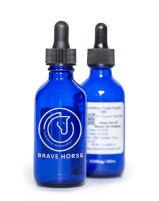
As far as dosage, it depends on the weight and size of the horse as well as on diet and route of administration. Administration via oil or Kelso’s Cubes would be preferred as it allows for faster effects and less strain on the liver. This is only if the horse will tolerate it. The dosage suggestion is supported by Dr. Juliet Getty, Ph.D. (consultant in equine nutrition) suggests that for a full-sized horse (660-1110 lbs.) a dose of 75-170 mg/day is appropriate and for a large breed horse (1100-1800 lbs.) a dose of 120-200 mg/day is appropriate.9
Scientists continue to uncover more uses for CBD and other cannabinoids in the treatment of serious diseases and illnesses. CBD has preliminarily demonstrated its utility in not only treating equine melanoma tumors but also in preventing recurrence and proliferation of such tumors without costly procedures or powerful drugs.
References:
(1) Valentine (2006). “Survey of equine cutaneous neoplasia in the Pacific Northwest”. J Vet Diagn Invest. 18.
(2) Moore, J. S.; Shaw, C.; Shaw, E.; Buechner-Maxwell, V.; Scarratt, W. K.; Crisman, M.; Furr, M.; Robertson, J. Melanoma in Horses: Current Perspectives. Equine Veterinary Education 2012, 25 (3), 144–151.
(3) Tumors of the Skin in Horses – Horse Owners https://www.merckvetmanual.com/horse-owners/skin-disorders-of-horses/tumors-of-the-skin-in-horses (accessed 2022 -10 -31).
(4) Metcalfe, L. V.; O’Brien, P. J.; Papakonstantinou, S.; Cahalan, S. D.; McAllister, H.; Duggan, V. E. Malignant Melanoma in a Grey Horse: Case Presentation and Review of Equine Melanoma Treatment Options. Irish Veterinary Journal 2013, 66 (1).
(5) Bachari, A.; Piva, T. J.; Salami, S. A.; Jamshidi, N.; Mantri, N. Roles of Cannabinoids in Melanoma: Evidence from in Vivo Studies. International Journal of Molecular Sciences 2020, 21 (17), 6040.
(6) Ladin, D. A.; Soliman, E.; Griffin, L.; Van Dross, R. Preclinical and Clinical Assessment of Cannabinoids as Anti-Cancer Agents. Frontiers in Pharmacology 2016, 7.
(7) Blázquez, C.; González-Feria, L.; Álvarez, L.; Haro, A.; Casanova, M. L.; Guzmán, M. Cannabinoids Inhibit the Vascular Endothelial Growth Factor Pathway in Gliomas. Cancer Research 2004, 64 (16), 5617–5623.
(8) Simmerman, E.; Qin, X.; Yu, J. C.; Baban, B. Cannabinoids as a Potential New and Novel Treatment for Melanoma: A Pilot Study in a Murine Model. The Journal of Surgical Research 2019, 235, 210–215.
(9) LLC, G. E. N. CBD for Horses – What You Can Expect https://gettyequinenutrition.com/pages/cbd-for-horses-what-you-can-expect (accessed 2022 -10 -31).